|
|
|
|
When the Hubble Space Telescope launched, one of the first galaxies
astronomers wanted to observe was Centaurus A. 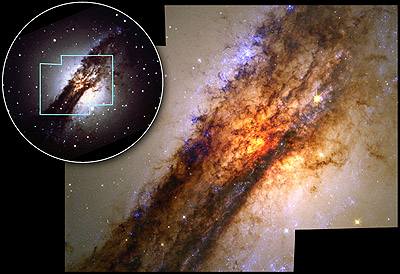 HST
gave us an unprecedented close-up view of the central region in visible
light, but the dark gas and dust still obscured our view to the
center where the radio jet originates.
HST
gave us an unprecedented close-up view of the central region in visible
light, but the dark gas and dust still obscured our view to the
center where the radio jet originates.
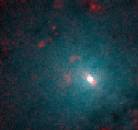
When HST was fitted with an infrared
camera, the veils of dust and gas were stripped away 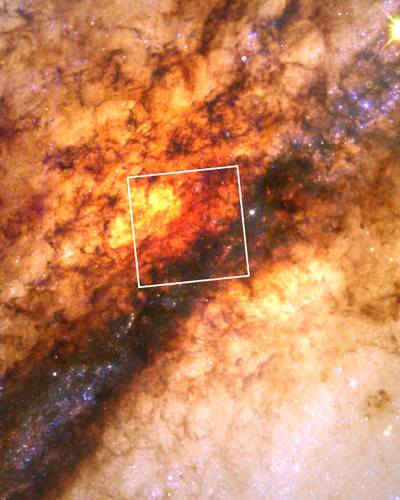 to
reveal a small but very hot core (see below, left). Subsequent
studies of the velocities of stars close to the core strongly suggest
that a very massive black hole is present and powering the radio
jets. (The box shown in the visible image on the right is the same
area observed in the infrared image below.)
to
reveal a small but very hot core (see below, left). Subsequent
studies of the velocities of stars close to the core strongly suggest
that a very massive black hole is present and powering the radio
jets. (The box shown in the visible image on the right is the same
area observed in the infrared image below.)
|
|


